Sensitive & Compromised
Before and After
When your skin feels tight, uncomfortable, reactive or easily irritated, it may be telling you that its natural protective function is under strain. Sensitive skin describes skin that reacts more readily than expected to products, environmental conditions or everyday stimuli.
You may experience stinging, burning, itching, redness or a feeling of tightness, sometimes without obvious visible changes. Compromised skin refers to skin whose protective barrier or normal functioning has been disrupted.
The outermost layer of the epidermis, known as the stratum corneum, acts as a vital defence system, helping retain moisture while limiting the entry of potential irritants, allergens and harmful microorganisms.
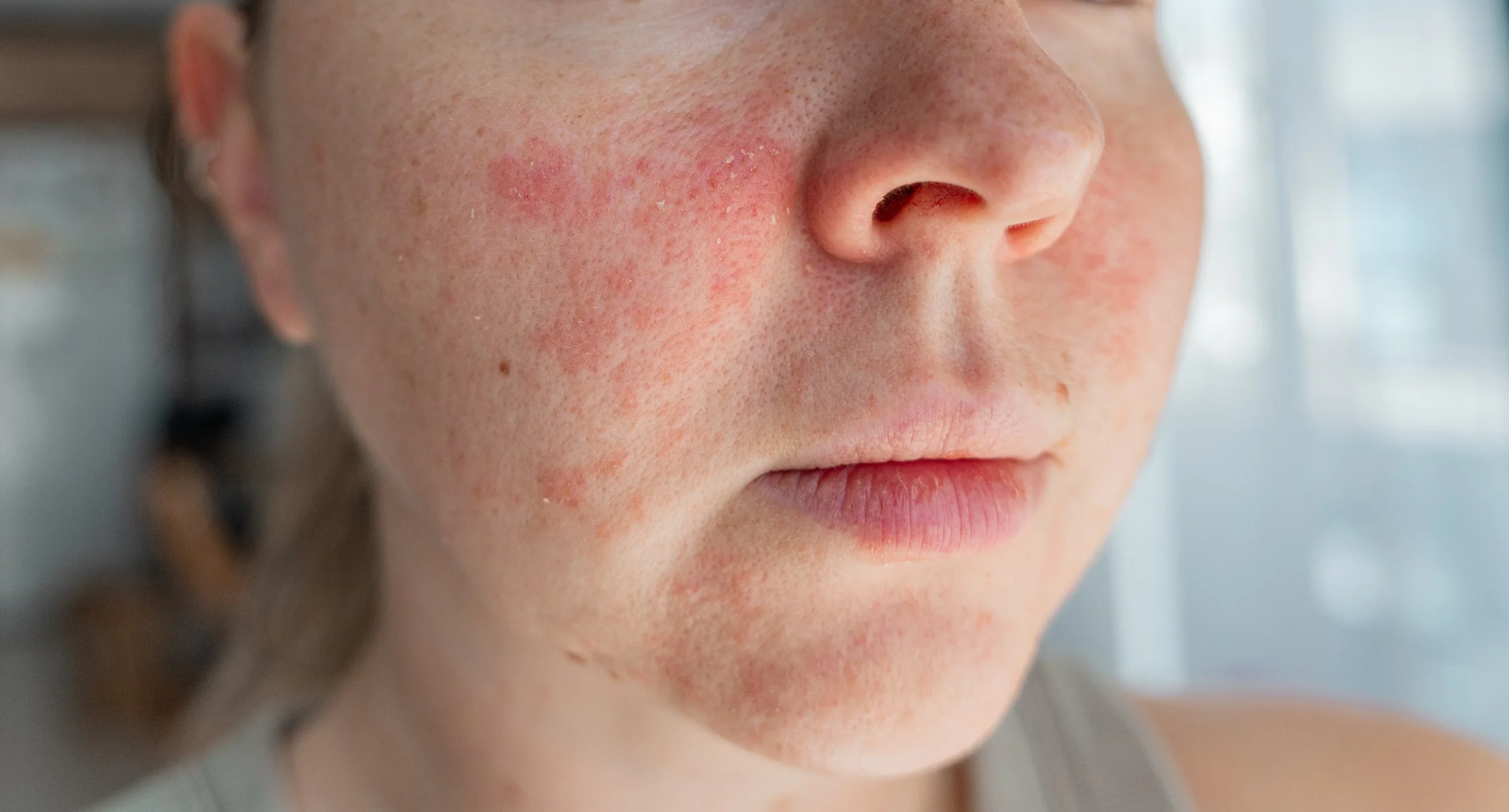
When this barrier is impaired, water can escape more readily through a process known as Transepidermal water loss (TEWL). The skin may become dehydrated, inflamed and increasingly reactive, creating a cycle in which irritation further weakens its ability to protect itself.
Although sensitivity and barrier impairment often occur together, they are not the same. Sensitive skin can have an apparently intact barrier, while compromised skin may develop temporary or persistent sensitivity.
What causes skin sensitivity and barrier disruption?
There is rarely one universal cause. Skin reactivity can develop through a combination of internal influences, external exposure and skincare practices.
Overuse of active ingredients
Excessive exfoliation, frequent chemical peels, strong retinoids or combining too many active ingredients can overwhelm the skin’s tolerance. When the rate of irritation exceeds the skin’s capacity to recover, the barrier may become disrupted, leaving the complexion dry, sore and increasingly reactive.
Environmental stressors
Cold weather, wind, low humidity, temperature fluctuations and excessive heat can place additional demands on the skin barrier. Pollution and ultraviolet (UV) radiation can also contribute to oxidative stress and inflammation, potentially aggravating existing sensitivity.
Underlying inflammatory skin conditions
Conditions such as rosacea, eczema and contact dermatitis can cause persistent or recurring sensitivity. These may involve impaired barrier function, inflammatory responses or heightened reactions to particular triggers.
Internal and hormonal influences
Hormonal changes, including those associated with perimenopause and menopause, can affect sebum production, hydration and barrier function. Stress, inadequate sleep and other lifestyle factors may also influence inflammatory pathways and the skin’s ability to recover, making existing sensitivity more difficult to manage.
What happens at a cellular level?
The skin barrier is more than a surface layer. It relies on organised skin cells, lipids and natural moisturising factors working together to maintain hydration and protection.
When the barrier is disrupted, the balance between moisture retention and water loss changes. Irritants may penetrate more easily, while inflammatory signals can activate the skin’s immune response. This may lead to redness, discomfort and increased sensitivity to products that were previously well tolerated.
Repeated irritation can prolong inflammation and interfere with normal recovery. For this reason, treating the visible symptoms alone may not be enough; identifying and reducing the factors driving the disruption is equally important.
Common signs of sensitive or compromised skin
Symptoms vary depending on the cause and severity, but may include:
Redness, flushing or a feeling of warmth.
Stinging, burning, itching or tingling.
Tightness, particularly after cleansing.
Dryness, flaking or rough texture.
Dehydration and increased moisture loss.
Increased reactivity to skincare products.
A weakened tolerance for exfoliants and active ingredients.
Recurring discomfort following environmental exposure.
Why restoring balance matters
When skin is compromised, adding more active ingredients or intensifying treatments can make matters worse. The priority is to reduce unnecessary irritation and give the skin the conditions it needs to recover.
A considered approach focuses on supporting the barrier, maintaining hydration, minimising inflammation and identifying avoidable triggers.
?????