
Rosacea
Before and After
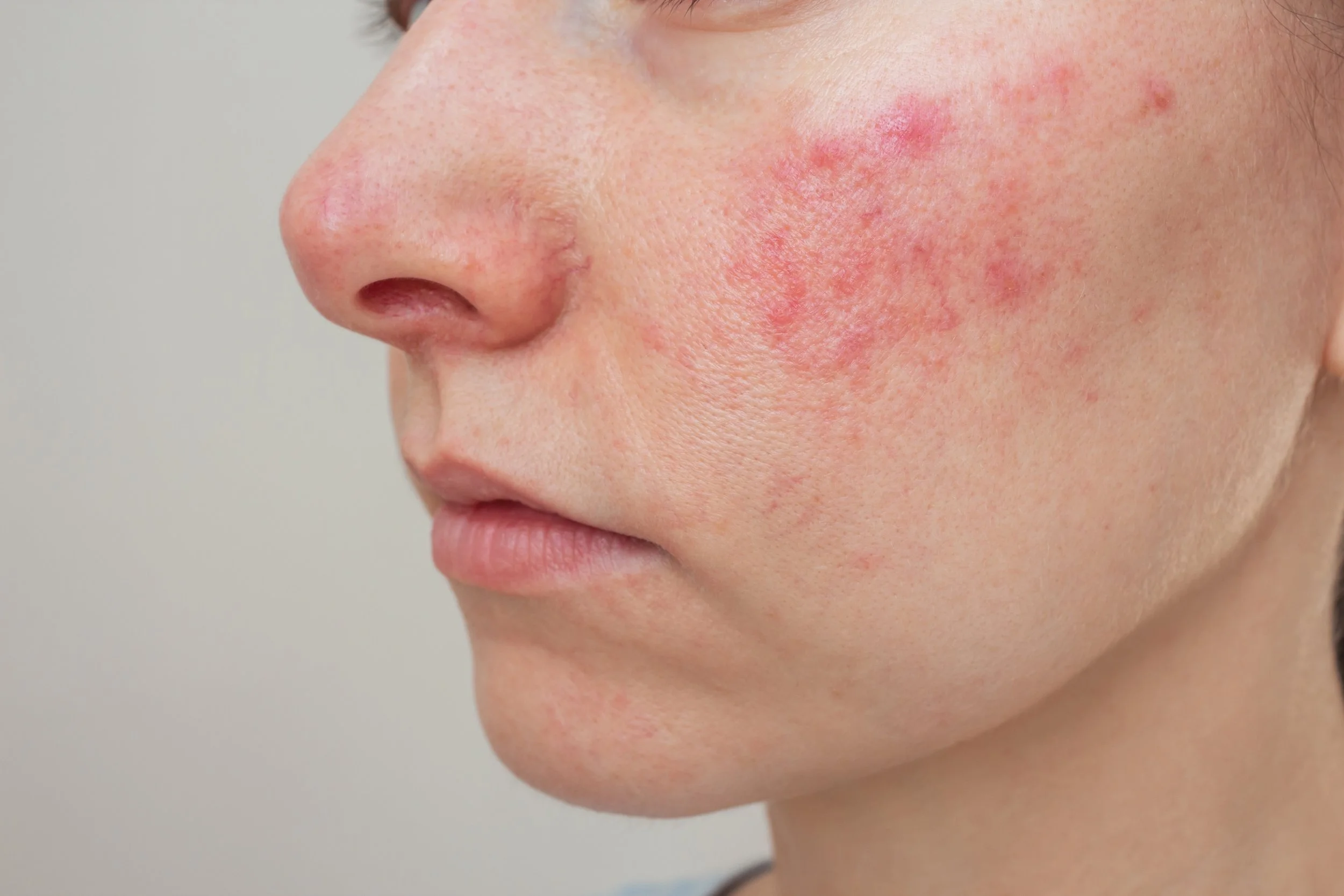
Rosacea is a chronic, inflammatory skin condition that primarily affects the central face, including the cheeks, nose, forehead and chin. It develops through a complex interaction between the skin’s immune response, vascular activity, sensory nerves, barrier function and the skin microbiome.
Although the exact cause is not fully understood, affected skin can become increasingly reactive to internal and external triggers, resulting in persistent redness, episodes of flushing, visible blood vessels and, in some cases, inflammatory papules and pustules.
Heat, UV exposure, temperature changes, stress, alcohol and certain skincare ingredients may aggravate symptoms by stimulating inflammatory pathways and increasing blood vessel dilation.
At a cellular level, inflammatory signalling and changes in the skin’s natural protective barrier can amplify sensitivity, increase moisture loss and make the complexion more vulnerable to irritation. Over time, this can create a cycle of inflammation and reactivity that requires careful management.
Rosacea and the Demodex mite
What triggers rosacea and facial redness?
Rosacea is a multifactorial condition, meaning that several processes may contribute to its development and flare-ups. Identifying individual triggers can help reduce unnecessary irritation, although avoiding triggers alone does not treat the underlying condition.
UV exposure and heat
Sun exposure is a common rosacea trigger. UV radiation can promote oxidative stress and inflammatory signalling, while heat can encourage flushing and vascular changes. Consistent sun protection and sensible management of heat exposure are important parts of supporting rosacea-prone skin.
Compromised skin barrier
When the skin barrier is impaired, moisture loss can increase and irritants may penetrate more readily. This can intensify stinging, burning and sensitivity, creating additional discomfort for skin already affected by rosacea.
Inflammatory responses
Rosacea involves changes in the skin’s innate immune response and inflammatory signalling. These processes can contribute to persistent redness, inflammatory lesions and heightened reactivity. This is why simply treating the visible redness may not address every aspect of the condition.
Lifestyle and environmental influences
Temperature extremes, emotional stress, vigorous exercise, alcohol and spicy foods can trigger flushing in susceptible individuals. Triggers vary, so recognising your own patterns is more useful than following a restrictive list of rules.
Rosacea at a cellular level
Rosacea involves more than superficial redness. Changes in immune signalling, neurovascular responses and the skin’s protective function interact to influence how the skin responds to everyday stimuli.
In affected skin, inflammatory mediators can contribute to vascular dilation and heightened sensitivity. The skin’s sensory nerves may also respond more readily to heat and other triggers, helping explain why some people experience pronounced warmth, stinging or burning.
Barrier disruption can further amplify discomfort, while ongoing inflammation may contribute to recurring inflammatory lesions. These mechanisms can reinforce one another, which is why rosacea requires an individualised approach rather than a single treatment aimed at one symptom.
One factor associated with certain forms of rosacea is Demodex folliculorum, a microscopic mite that naturally lives within hair follicles, particularly around the face. These mites are commonly present on healthy adult skin, so their presence alone does not mean someone has rosacea.
Research has found that increased Demodex density is associated with rosacea in some individuals, particularly those experiencing inflammatory papules and pustules.
However, it is not established as the sole cause of rosacea, and not everyone with rosacea has an increased mite population.

?????